Confidential Pitch Document. Brooks Running
InkBlot Narratives. 2026
InkBlot Narratives. A Series Pitch for Brooks Running

WORLD'S
WILDEST
RACES

Six races nobody would invent. Thousands of people who sign up anyway. A character-first documentary series about the run that strips you down to what you actually are.

Explore
01

The Series

Every city has runners. Not every runner has raced like this.

Every year, in places most runners have never heard of, something extraordinary happens. Someone paddles 340 miles of the Missouri River through the August night. Someone runs 200 miles underground in the dark. Someone lines up against a horse and wins.

World's Wildest Races is a character-first documentary series. Each episode enters one singular race and the singular people drawn to it. The course is the backdrop. The humans are the story.

Part quirky character study. Part race film. Equal parts absurd and profound. This is what happens when the human need to push—not to prove something, but to find something—meets the most unusual tests on earth.

The race doesn't tell you how fast you are. It tells you who you are.
6 eps
Season One
6 races
Real. Verified. Bizarre.
52 min
Per episode
5 countries
US, UK, Wales, Canada, France

Season One. Episodes

The Six Races

01
Kansas City to St. Charles, Missouri, USA 340-Mile River Race

The River That Never Ends

MR340. The World's Longest Non-Stop River Race

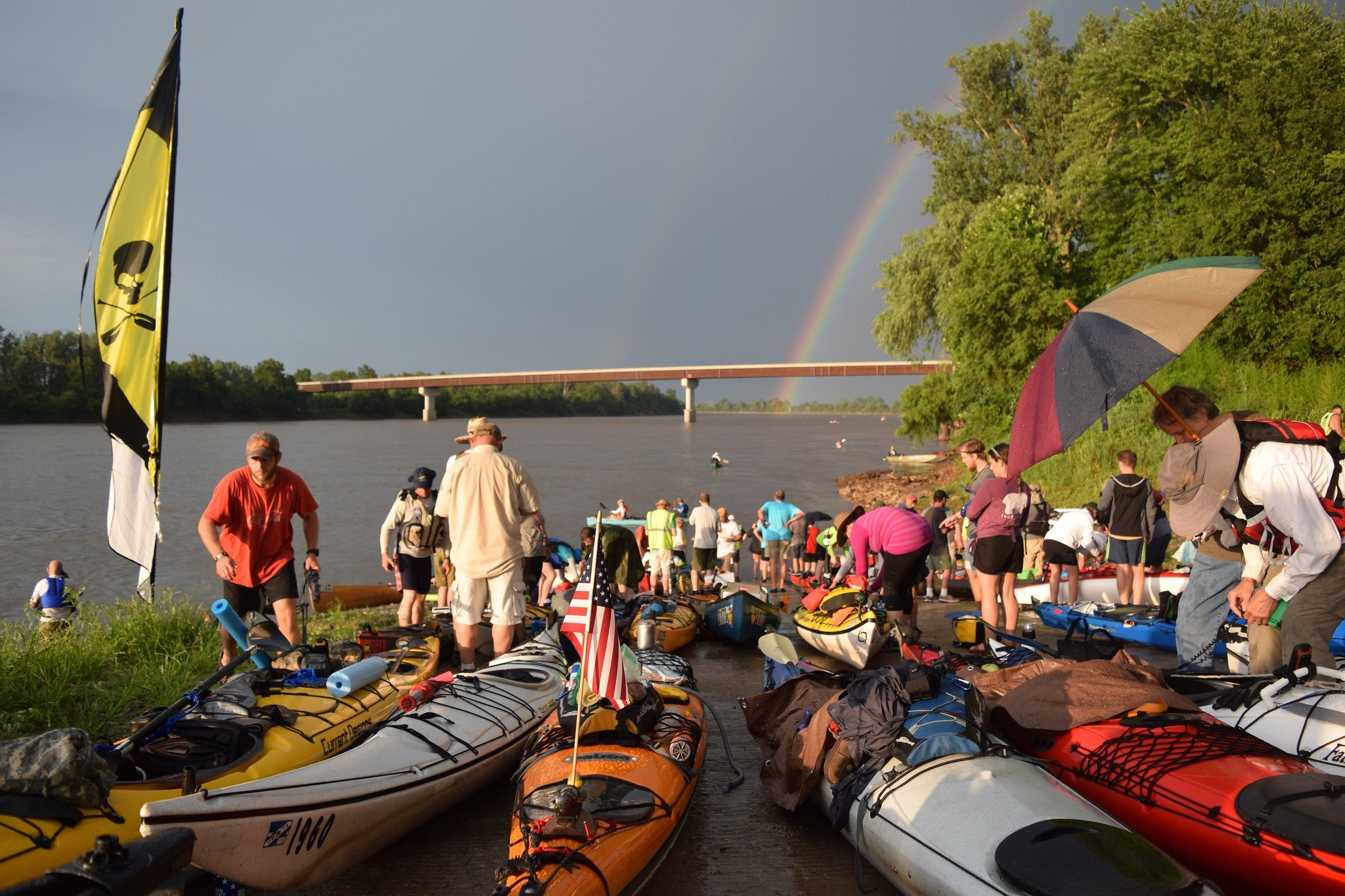
The Missouri River doesn't care about your race plan. At 340 miles, 88 hours on the clock, no required sleep, it will rearrange your spreadsheet the moment a sandbar appears in the dark at 3am, two hundred miles from the finish.
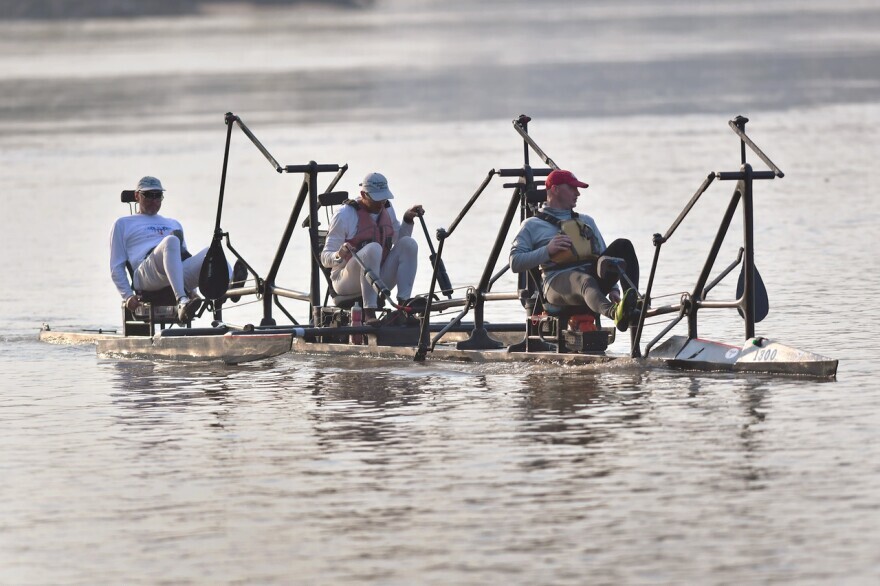
The MR340 runs from Kansas City to St. Charles every July. Kayaks, canoes, stand-up paddleboards, dragon boats. First-timers and veterans who keep coming back. Di is 70 years old. This July is her 18th time. "For me, just finishing is a win," she says. She will likely say this again next year.

There is a moment near Jefferson City, roughly 220 miles in, where race organizers say the race doesn't actually start until you get there. Everything before Jefferson City is just getting warmed up. At Jefferson City, exhausted, still 120 miles from home, is when you find out if you have what it takes.

The finish line crowds and cheers. Last year, one canoe paddled right past it. The crew was too spent to notice they'd finished. The crowd had to yell. They turned the boat around upstream and completed the final 200 yards on borrowed adrenaline. The crowd went wild.

Distance
340 miles
Time Limit
88 hours
Entries
400+ boats
02
Frozen Head State Park, Tennessee, USA 100+ Miles. 5 Loops. Unmarked

The Race That Eats Its Young

The Barkley Marathons. Twenty Finishers in Forty Years

The course isn't marked. There are no GPS devices. You navigate by compass and paper map and collect pages from hidden books to prove you found each checkpoint. The race director doesn't trust you. His name is Lazarus Lake. He created the Barkley Marathons in 1986 after a convicted murderer escaped from a nearby prison, was recaptured 55 hours later, and had traveled eight miles. Lake thought he could do at least 100.

Since 1986, only 20 different people have finished the Barkley. In 2024, Jasmin Paris became the first woman to complete it. She crossed the finish line with exactly one minute and thirty-nine seconds to spare before the 60-hour cutoff. The crowd was in tears. Paris was in tears. Lazarus Lake, characteristically, was not.

Entry is by invitation only. The application process is secret. The start time is announced the night before, signaled by a single bugle horn. The race fee is $1.60, which Lake rounds to $1.65 to cover the cost of a postage stamp. You don't run the Barkley to win. You run it to find out if the version of you that trained for this is the version of you that shows up when it counts.

Distance
~100 miles
Time Limit
60 hours
Total Finishers
20 ever
03
Combe Down Tunnel, Bath, England 200 Miles. Underground

200 Miles of Dark

The Tunnel Ultra. Run Until You See Things That Aren't There

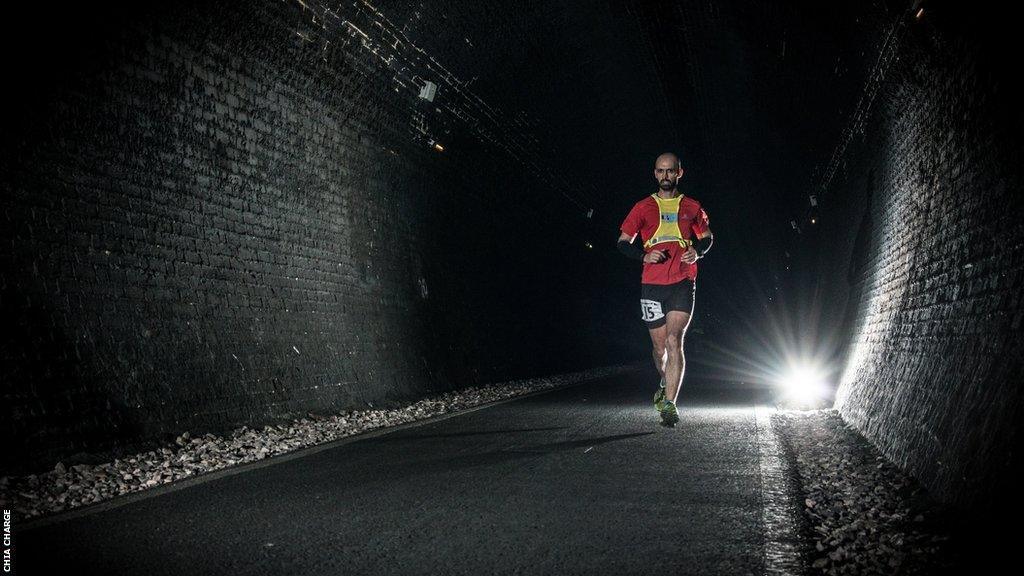
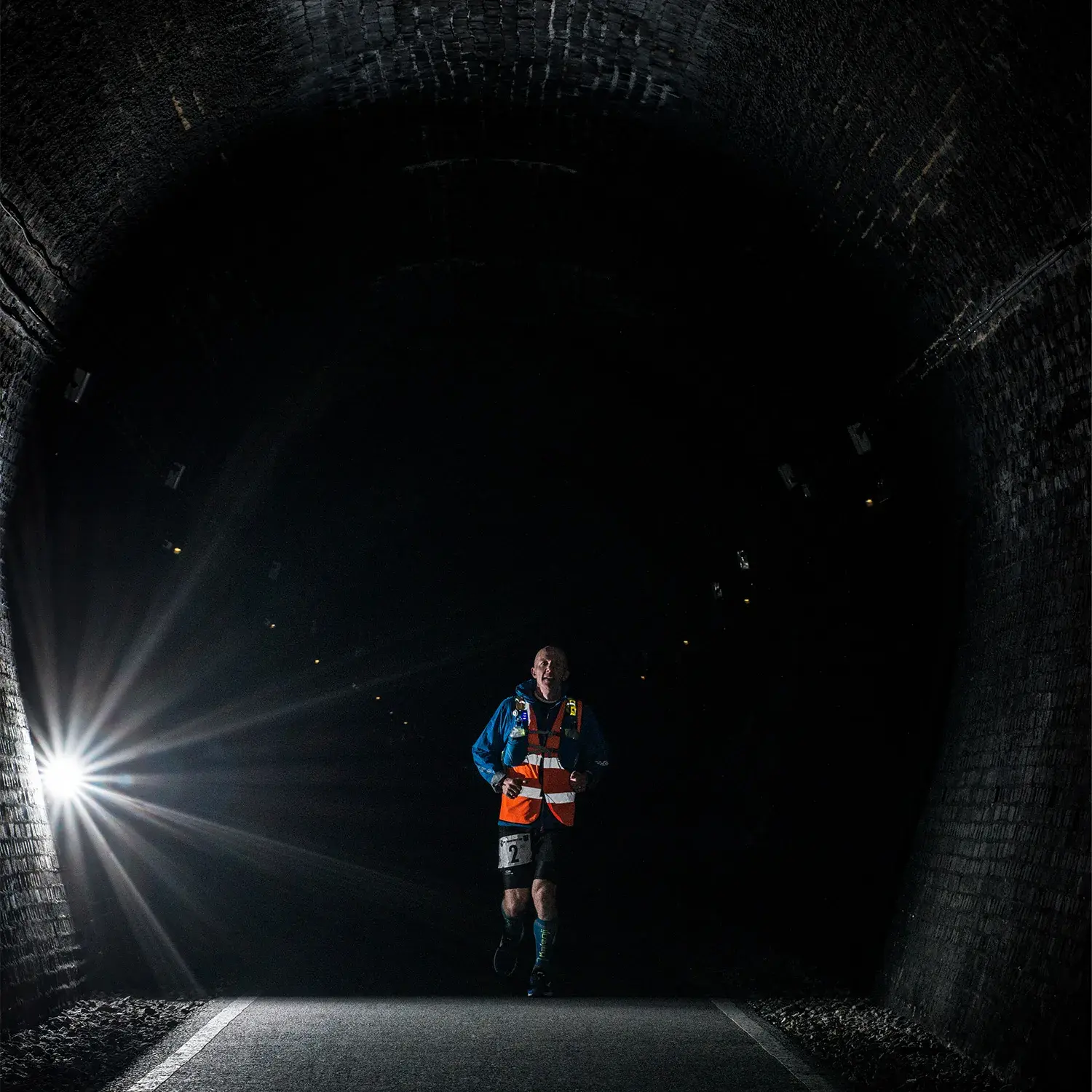
The tunnel is one mile long. You run it 100 times. Out and back, out and back. Through a former Victorian railway tunnel in Bath, England. The floor is flat. The walls close in. From 11pm to 5am there is no lighting at all. The bat population that lives in the ceiling above demands it. The only sounds, other than your footfall, are art installation speakers mid-tunnel that emit sounds specifically designed to be unsettling.

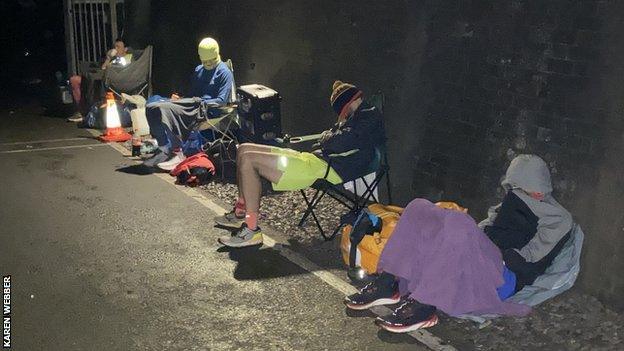
No headphones. No crew support. No way stations. A portable toilet outside the entrance. Fold-up table with water, tea, and instant noodles.

The 2026 race started with 43 runners. Eight finished. Documented hallucinations include a fully furnished Victorian sitting room appearing in the middle of the tunnel. A tunnel that seems to curve and lengthen. Figures standing in the dark that nobody put there. You cannot look away because there is nothing else to look at. This is 200 miles. The flat kind.

Race director Mark Cockbain's stated goal: "a very low-key, no-nonsense extreme test of running ability." He is telling the truth. It is very low key. It is no-nonsense. And it will end something in you, in the dark, in the flat, and leave something else behind.

Distance
200 miles
Time Limit
55 hours
2026 Finish Rate
8 of 43
04
Llanwrtyd Wells, Powys, Wales 21 Miles. Humans vs Horses

The Pub Debate That Became a Race

Man vs Horse Marathon. Since 1980. Every June. In a Tiny Welsh Town

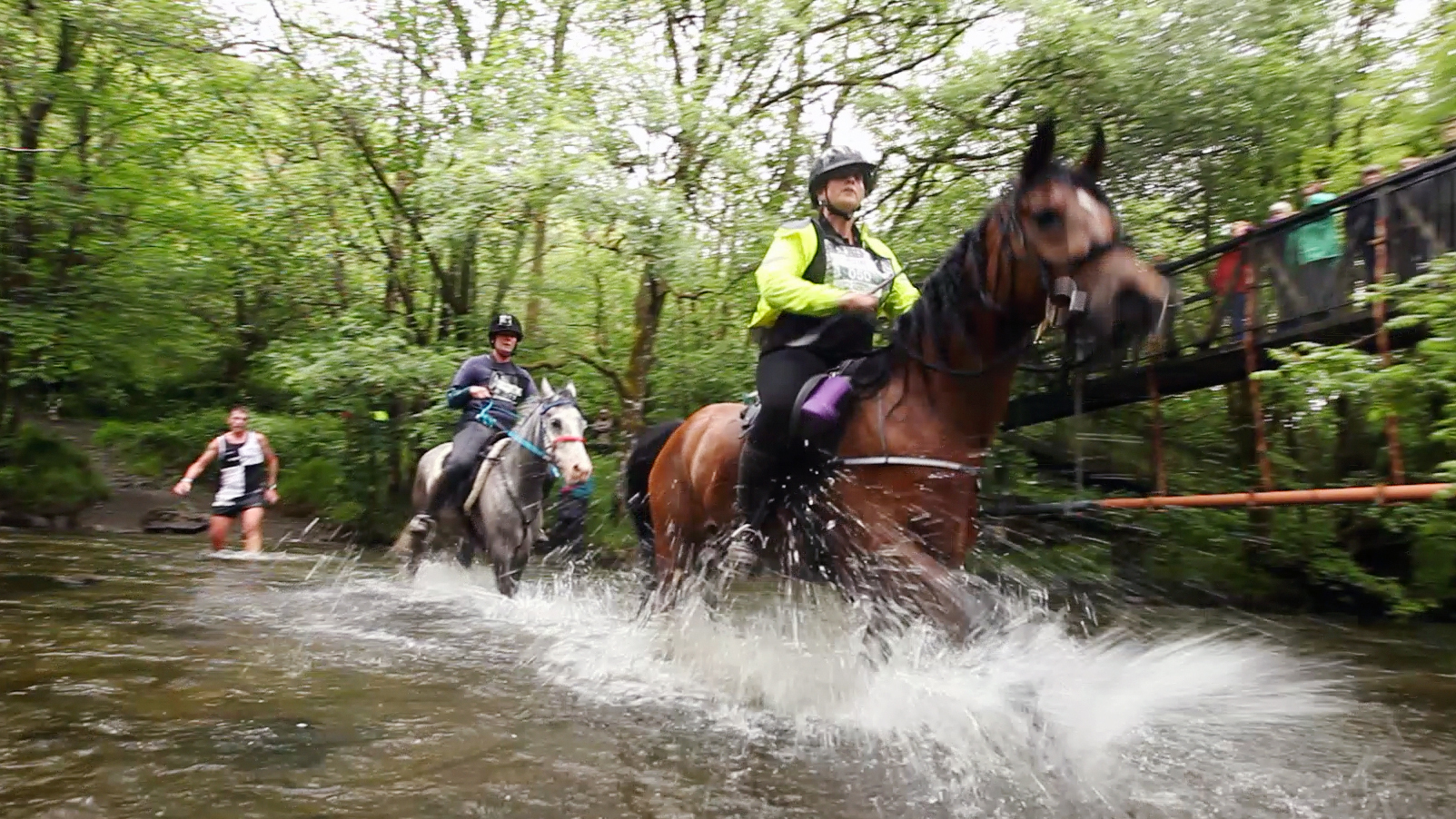
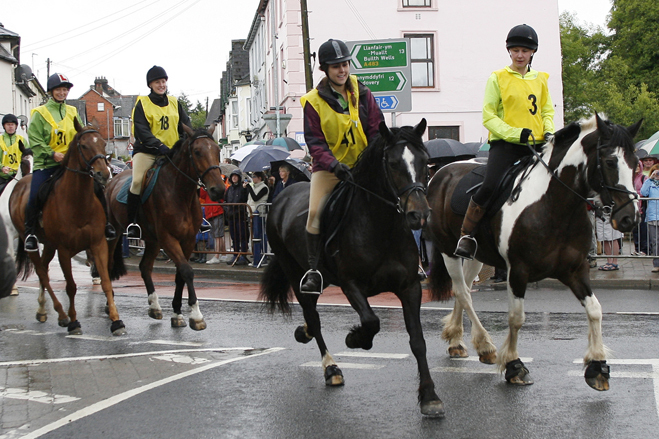
In 1980, Gordon Green overheard two men arguing in his pub. The Neuadd Arms, Llanwrtyd Wells, Wales, population 600. One man claimed that over a long enough distance across open country, a human runner could beat a horse. Green decided this was worth testing in public. The Man vs Horse Marathon has run every June since.

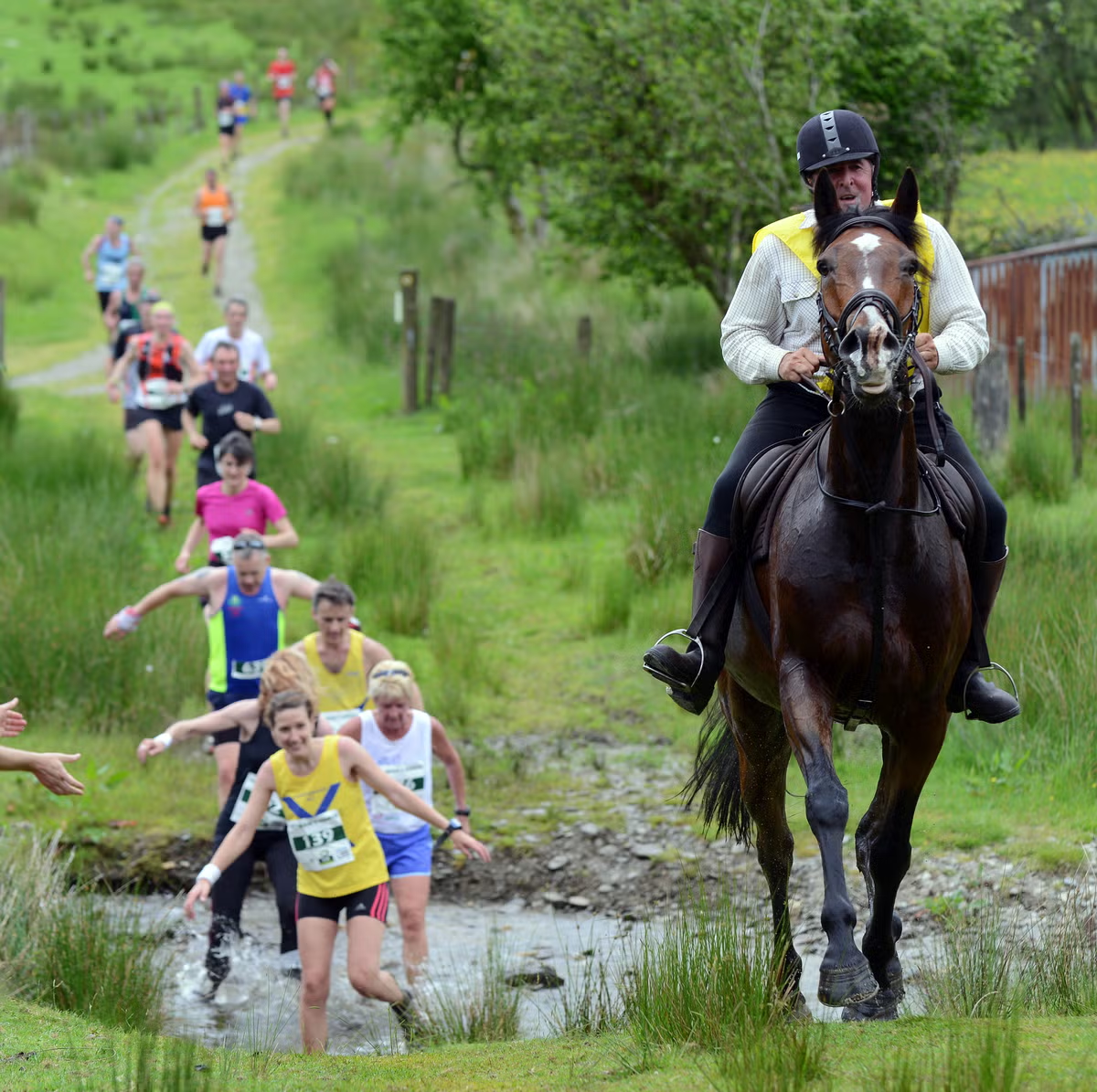
The course: 21 miles of Welsh mountain roads, trails, and cross-country terrain. On one side of the start line: runners. On the other: horses and their riders, given a 15-minute head start because horses are horses. For 25 years straight, the horses won every time. Then in 2004, Huw Lobb ran 2:05:19. Two minutes ahead of the fastest horse. In 2025, Dewi Griffiths beat the leading horse by 12 minutes.

The race has been marred by controversy. In 2009, organizers controversially deducted vet check times from horse totals, turning a human victory by two minutes into a horse victory by eight. The humans were furious. The horses were unaware.

What draws runners here is the same thing that drew them in 1980: it is the dumbest premise for a race ever conceived, and it is completely sincere. Nobody can explain it. That's the point.

Distance
21 miles
Running Since
1980
Human Wins
3 total
05
Mill Valley to Stinson Beach, Marin County, California 7.5 Miles. Oldest Trail Race in America

The Race That Doesn't Care How Fast You Are

The Dipsea. Running Since 1905. Still Nobody's Figured It Out

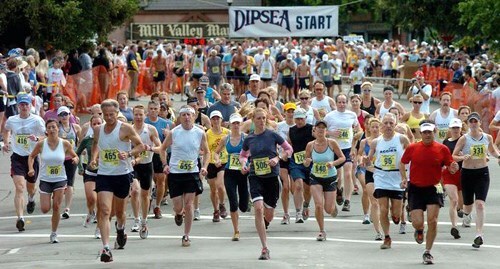
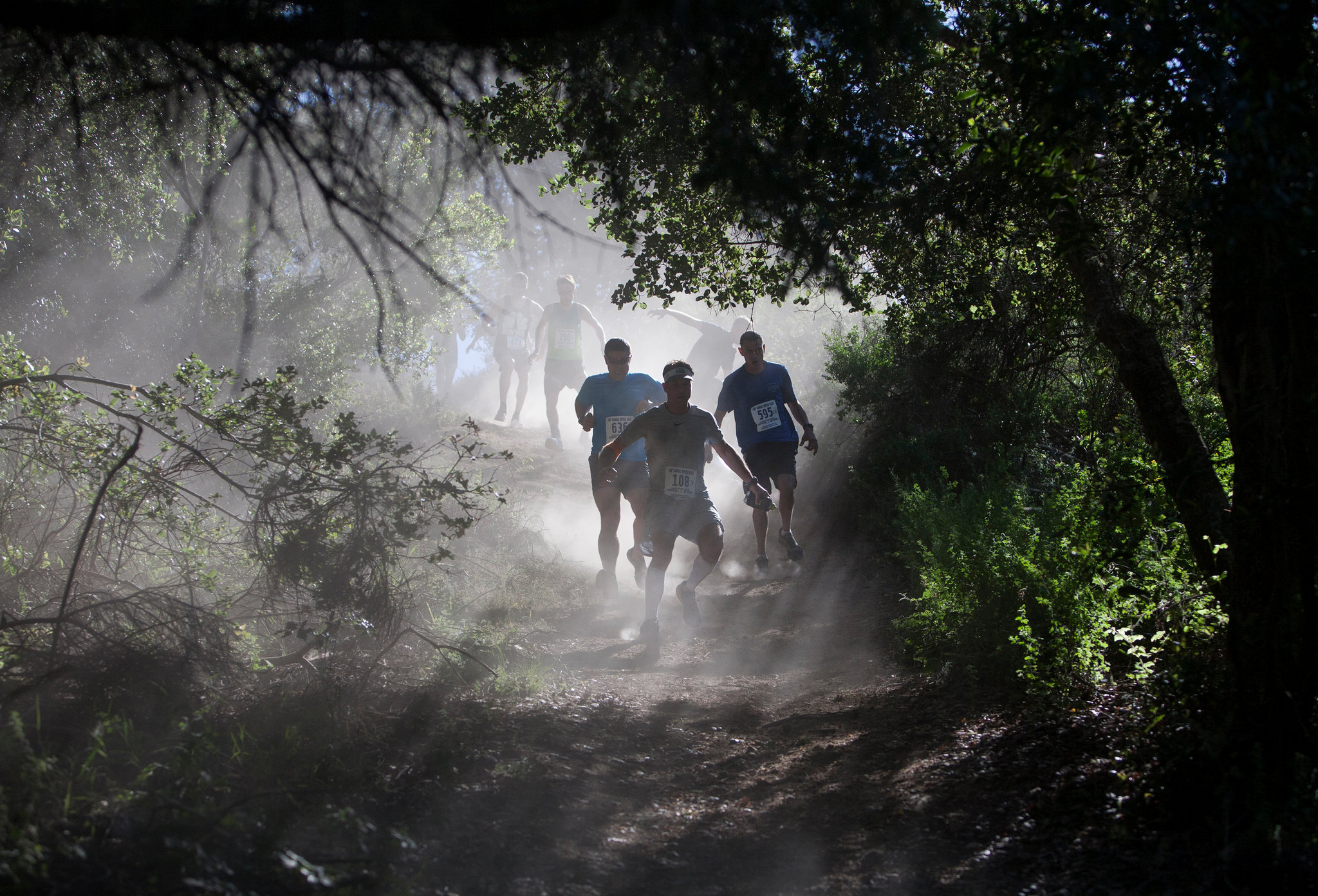
The Dipsea begins with 671 stairs in Mill Valley. It ends at the Pacific Ocean in Stinson Beach, 7.5 miles and 2,100 feet of elevation change later. It is the oldest trail race in America. Started in 1905 when two San Francisco men made a bet. That part is ordinary enough. What happens next is not.

The Dipsea uses a handicap system. The oldest and youngest runners start first, up to 25 minutes ahead of the fastest. The course has legal shortcuts. Routes through private property that are only permitted during the race. Names like Suicide and The Swoop. A competitor named Jack Kirk finished 68 consecutive Dipseas. His last was at age 96.

This means an eight-year-old child can beat an Olympic-caliber runner. This has happened. This is considered normal. The elite runners do the math differently. They know the course. They know the shortcuts. They know who has a 25-minute head start. They chase. The front of the race is a relay of bodies of all ages, all sizes, all speeds, threading through redwood forest and coastal scrub.

The Dipsea doesn't care how fast you are. It cares how smart you are, how well you know the land, and whether you still want it at mile seven when your legs are finished and the ocean is right there.

Distance
7.5 miles
Running Since
1905
Youngest Winner
Age 8
06
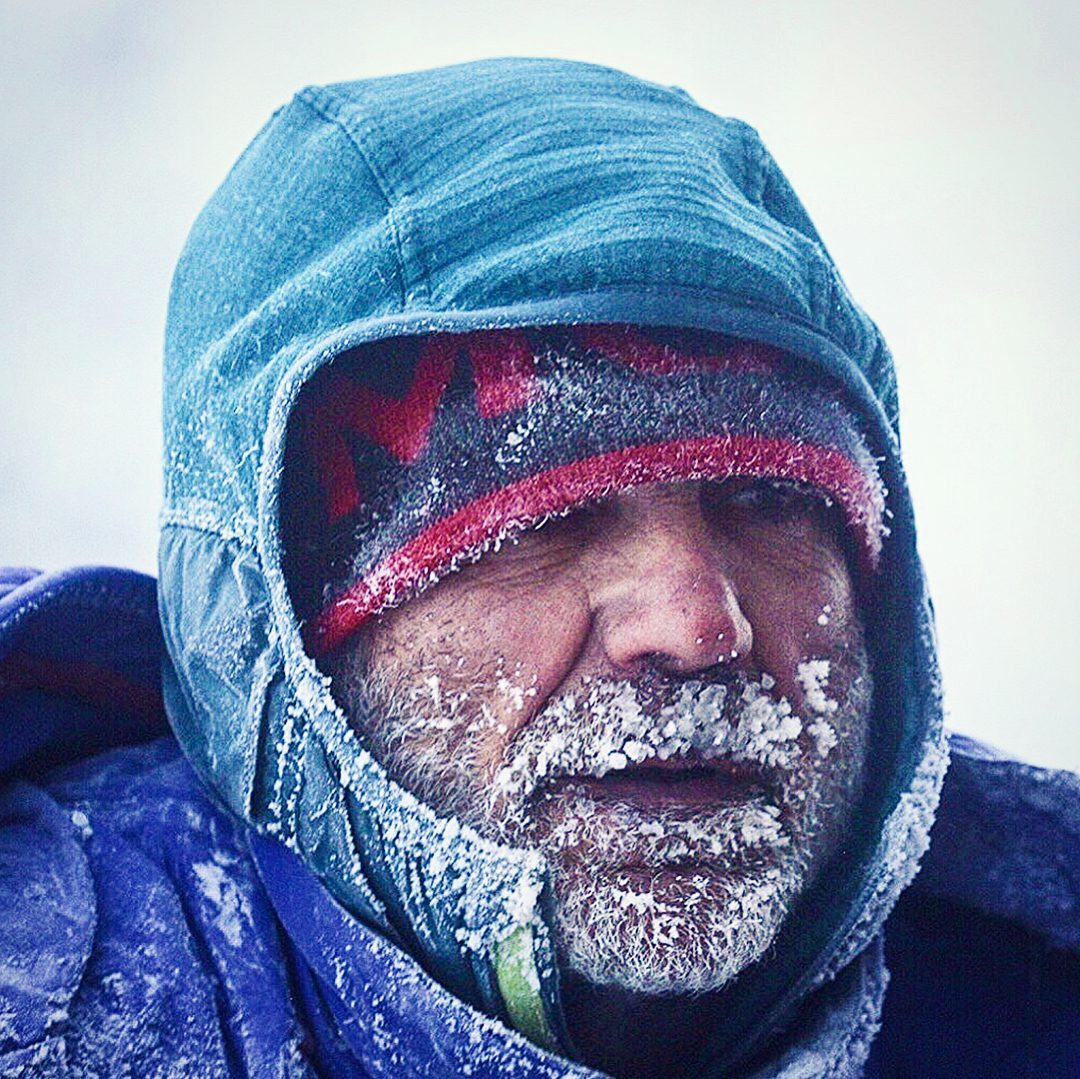
Yukon Quest Trail, Yukon, Canada 100–430 Miles. Winter. −58°F

Everything Breaks at −58

Yukon Arctic Ultra. The World's Coldest and Toughest Ultra

At minus 58 degrees Fahrenheit, electronics fail. Gels freeze solid. The exposed skin on your face begins to burn within minutes. The question at the Yukon Arctic Ultra isn't whether the cold will affect you. It will. The question is whether you've built a version of yourself that can keep moving when it does.

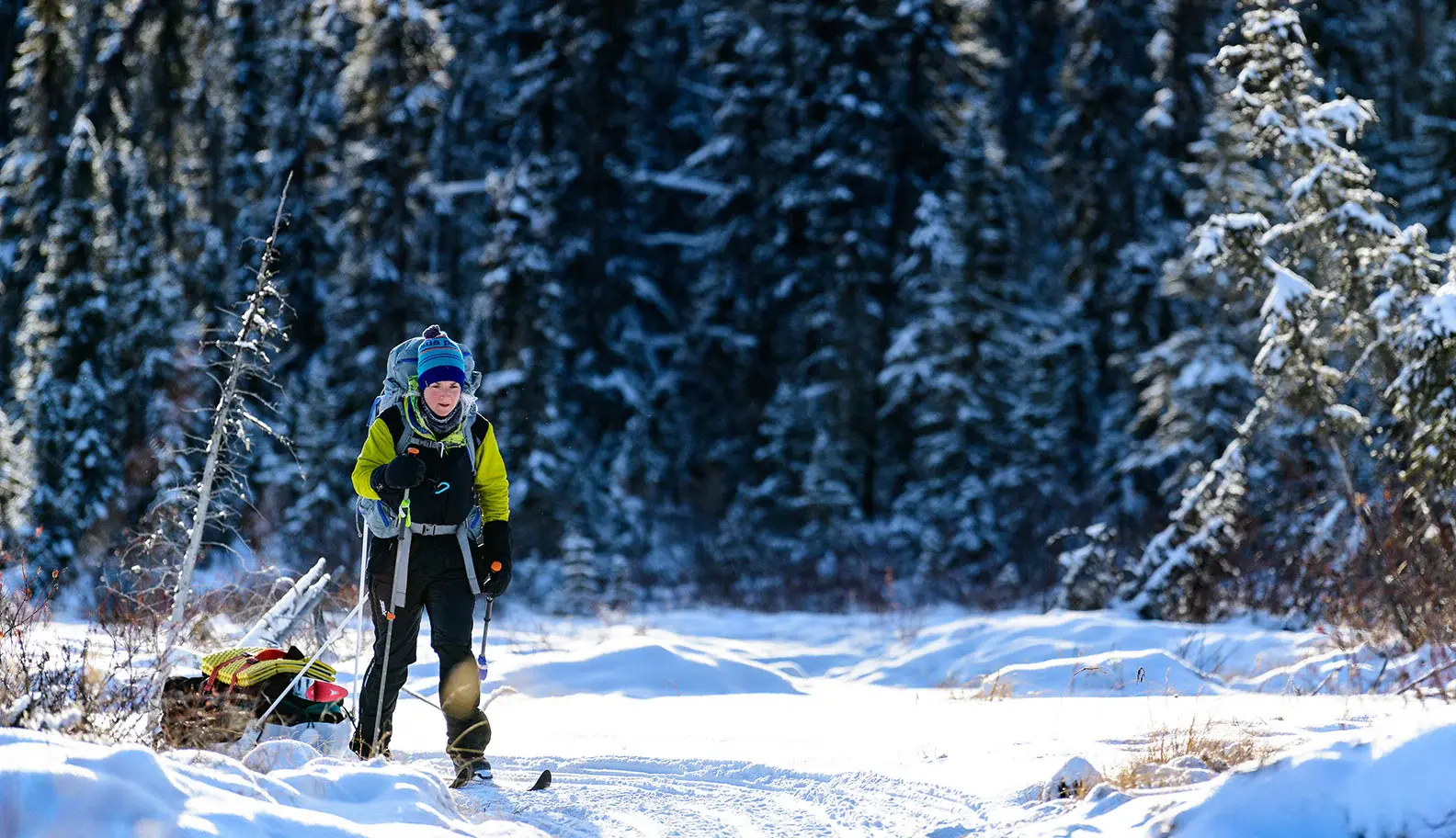
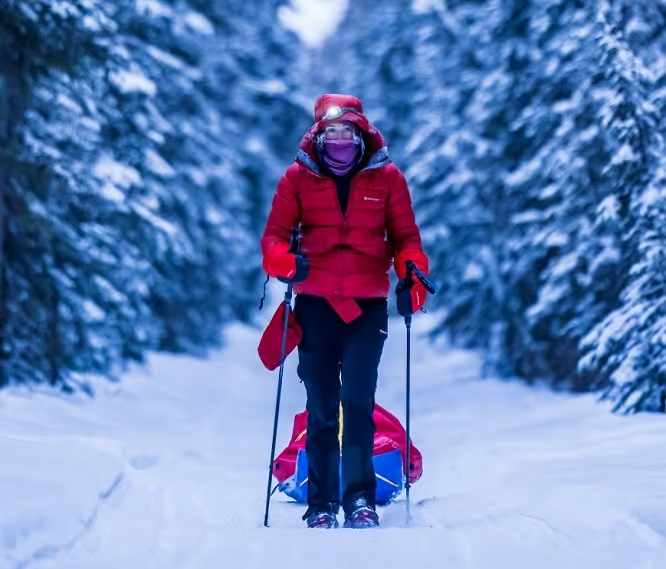
The race follows the Yukon Quest dogsled trail through the Yukon wilderness in January and February. Competitors choose their distance: 100 miles, 300 miles, or 430 miles. They go on foot, mountain bike, or cross-country skis. They carry everything they need to survive. There are checkpoints. There are medics. But between those checkpoints, it is you and the cold and the trail and the dark for days.

The Yukon Arctic Ultra attracts a specific type of person. Not necessarily the fastest. Not necessarily the most experienced. But the one who looked at the list of the world's hardest races and needed to know which one they couldn't finish. Then they trained. Then they came here. Some of them find out they can. Some find out they can't. All of them come back changed.

Distance Options
100 / 300 / 430 mi
Temperature
To −58°F
Season
January

The Format

Character study first. Race second.

Every episode of World's Wildest Races follows the same structure: meet the humans before the gun goes off. Understand what brought them here, what they're running toward, what they've already left behind. By the time the race begins, you know these people.

Then comes the race. Filmed as a cinema-quality, character-driven narrative. Not a highlight reel. Not a recap. The actual experience of what it is to do this. The middle 200 miles of the Tunnel, alone in the dark. The moment past Jefferson City when the Missouri River decides who stays and who quits.

This is the format that made Free Solo and The Rescue matter beyond their subject matter. The sport is the container. The human story is what fills it.

Episode Structure

I
The Characters
Meet 4–6 competitors. Their lives, their training, their reason for being here. No voiceover narration. Observational documentary. Cinema-vérité.
II
The Course
A deep dive into the race itself. Its history, its strange logic, why it exists, what it asks of the people who enter it.
III
Race Day
The race unfolds. Character arcs and race arc braid together. Cinematic cinematography. Drone, helmet cam, follow cam, night vision.
IV
The Aftermath
What it meant. Who finished. Who didn't. What changed. Brief, honest, earned. Not triumphalist. These races do not guarantee victory.

Why Brooks

Built for the runner who needs to find out.

Brooks doesn't sell shoes to people who run. It sells shoes to people who run because they have to. Because the run is the place where everything else gets stripped away and what's left is the actual version of you.

World's Wildest Races puts that exact person on screen, in the most extreme and unusual conditions on earth, asking the only question that has ever mattered: what are you made of?

These aren't professional athletes. They're the Brooks audience. The urban runner who needs to find out. The front-of-pack chaser who studies marathon splits the way other people study box scores. The person who heard about this race three years ago and has been thinking about it ever since.

The series is built around global cities and global running culture. The MR340 draws paddlers from across the US heartland. The Barkley Marathons is watched globally by the trail running community. The Tunnel Ultra is a British race with international cult status. Man vs Horse fills a small Welsh town with runners from across Europe. The Dipsea draws from San Francisco and beyond. The Yukon pulls competitors from twenty countries. This is Brooks' world: global metros, universal running culture, the run as the connective tissue of the species.

The show's tone—not triumphalist, not gear-forward, deeply character-driven—is the exact tone of "awaken aliveness." These aren't commercials for toughness. They are honest portraits of what it is to be a human who runs. That's the most powerful thing Brooks can put its name on.

The Urban Runner

18–34. NYC, Boston, LA, Berlin, London, Tokyo. Running is identity. Gear doubles as outfit. The run is self-expression and social currency. World's Wildest Races gives them something to aspire to that isn't a marathon time.

Front of Pack

Competitive, obsessive, technical. Follows the Barkley lottery like soccer fans follow transfer windows. Already knows what the MR340 is. Will watch this series with a heart rate monitor on.

The Awakening Runner

Runs because something in them demands it. Not for medals or metrics, but for the version of themselves that only shows up past mile 15. These races are mirror images of that impulse, magnified to the extreme.